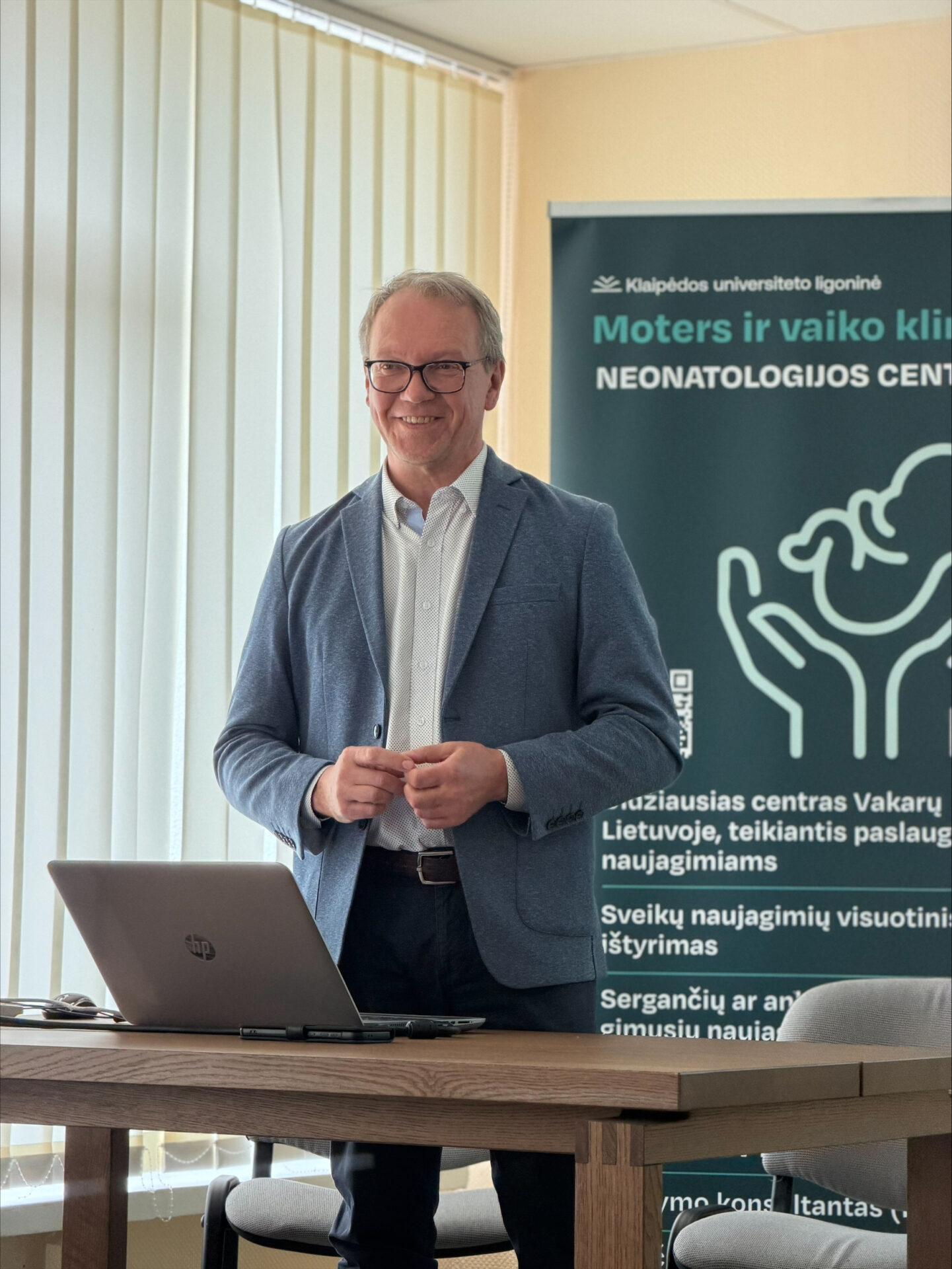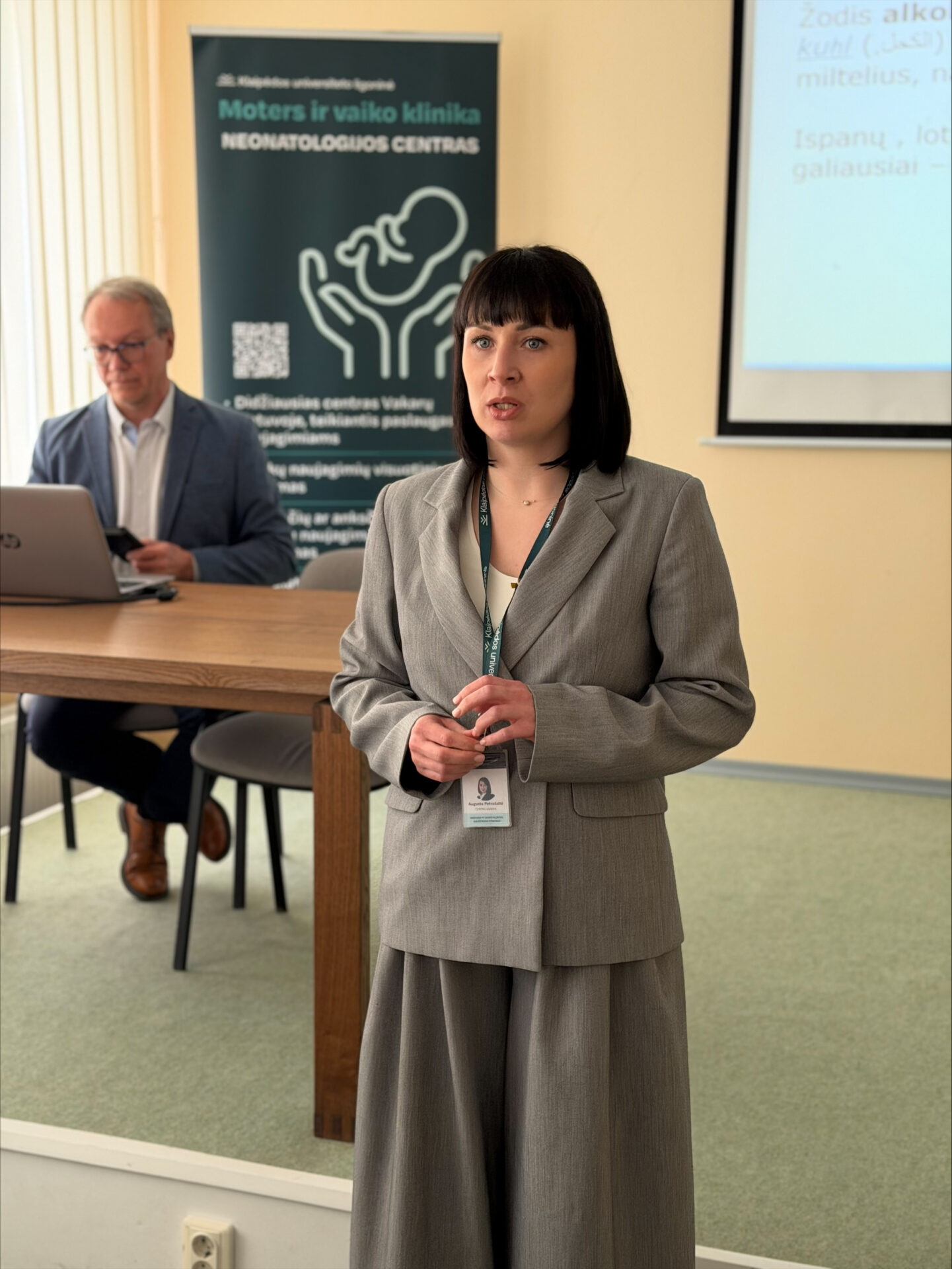
On May 26, 2026, pilot training entitled “Fetal Alcohol Spectrum Disorders (FASD): From Prevention to Early Diagnosis and Care” was organized by Klaipėda University Hospital in Lithuania within the framework of the EU Interreg South Baltic Programme project “FASD-Bridge”.
The training brought together healthcare professionals from multidisciplinary fields, including pediatricians, neonatologists, gynecologists, midwives, nurses, psychologists, rehabilitation specialists and other healthcare practitioners involved in maternal and child health care. The main aim of the event was to strengthen professional competencies related to prevention, early recognition, diagnosis and interdisciplinary support for children and families affected by Fetal Alcohol Spectrum Disorders.
During the training, participants were introduced to the current scientific evidence regarding prenatal alcohol exposure and its impact on fetal development. The speakers highlighted the prevalence and long-term consequences of FASD at global and European levels, emphasizing that FASD remains one of the leading preventable causes of developmental and neurobehavioral disorders in children.
Particular attention was devoted to early identification of FASD-related symptoms, challenges in differential diagnostics, and the importance of timely intervention and coordinated support services. The presentations also addressed communication strategies with pregnant women and families, underlining the importance of empathetic, non-judgmental and supportive counselling approaches aimed at prevention and risk reduction.
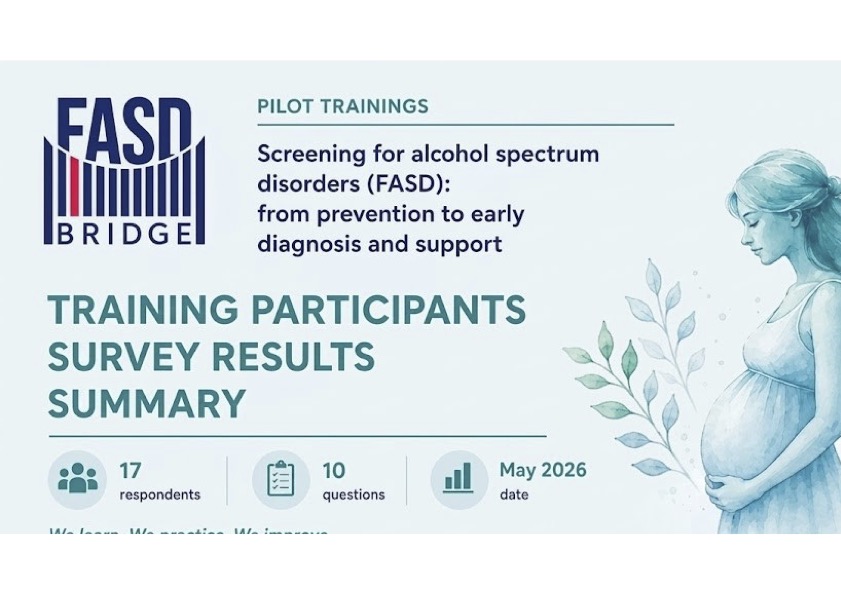
As part of the pilot training, participants were invited to complete an interactive QR code-based survey designed to assess professional awareness, perceived challenges and practical needs related to FASD prevention, diagnosis and support. A total of 17 healthcare professionals from multidisciplinary backgrounds participated in the survey, including midwives, nurses, obstetric and gynecology specialists, and other healthcare practitioners.
The survey results demonstrated a high relevance of the training for clinical practice, with 75% of respondents evaluating the training as “highly relevant” to their professional work. At the same time, the responses revealed important systemic gaps related to FASD in Lithuania. The most frequently identified challenges included lack of specialist knowledge about FASD (64.7%), insufficient early recognition and diagnostic algorithms (58.8%), and the absence of clear recommendations and management guidelines (52.9%).
Participants also highlighted communication-related barriers when discussing alcohol use during pregnancy. The two most commonly reported difficulties were the lack of clear recommendations on how to address the topic with patients (82.4%) and the fact that patients do not always respond openly during consultations (82.4%).
Importantly, the training had a positive impact on participants’ confidence and preparedness. Following the session, 76.5% of respondents reported feeling better prepared to discuss alcohol use during pregnancy, while 64.7% indicated increased confidence in identifying possible signs of FASD. The majority of participants additionally expressed a strong need for further practical training, diagnostic algorithms and evidence-based clinical recommendations.
Furthermore, the training served as an important platform for discussing existing gaps in awareness, diagnostics and service accessibility in the South Baltic region, while also encouraging stronger interinstitutional and interdisciplinary cooperation among healthcare and social care professionals.
In summary, the pilot training provided participants with practical and evidence-based knowledge on FASD prevention and care, strengthened awareness of the challenges associated with prenatal alcohol exposure, and contributed to the overall objectives of the FASD-Bridge project in improving prevention, early diagnosis and support systems for affected children and families in the South Baltic region.