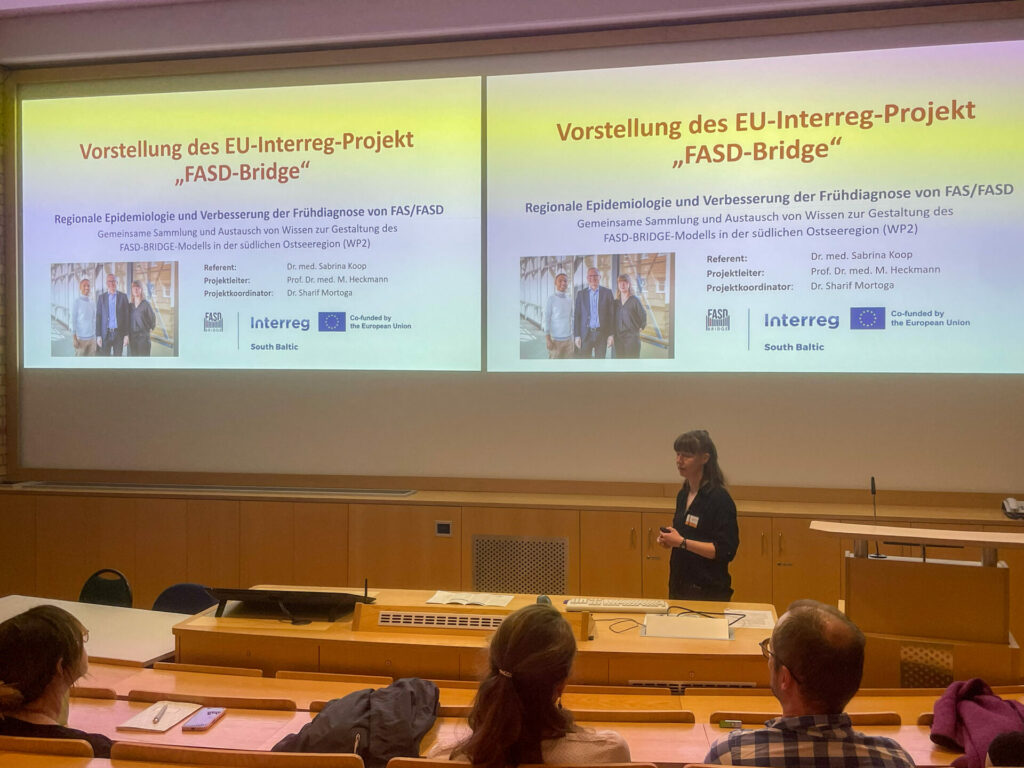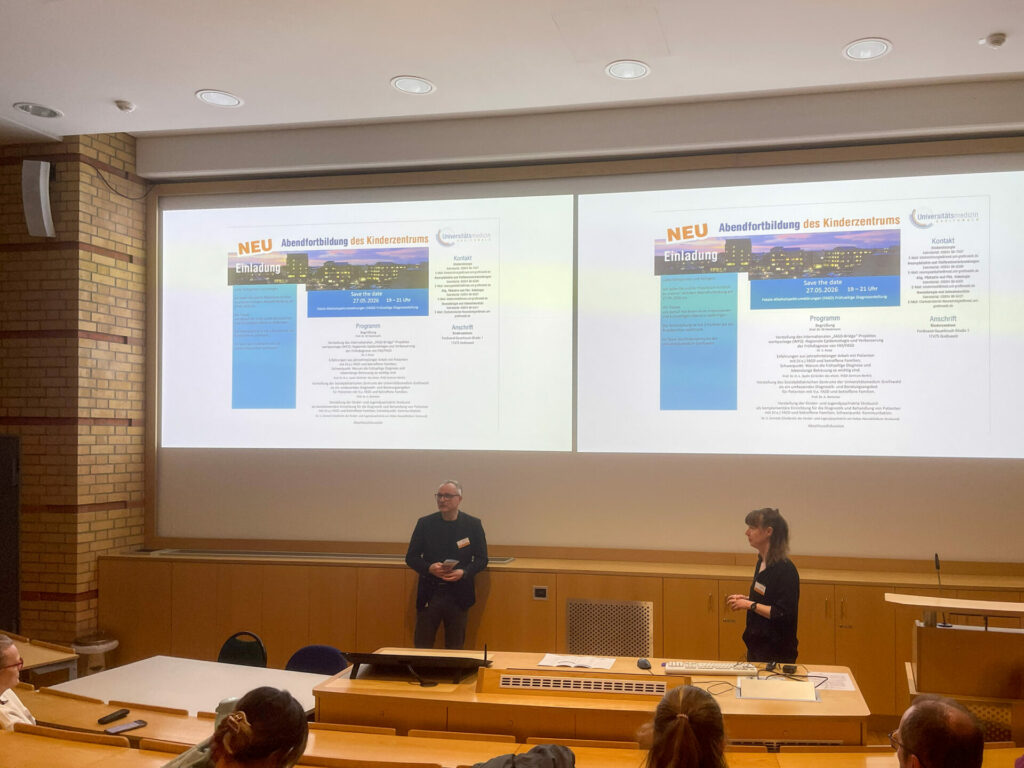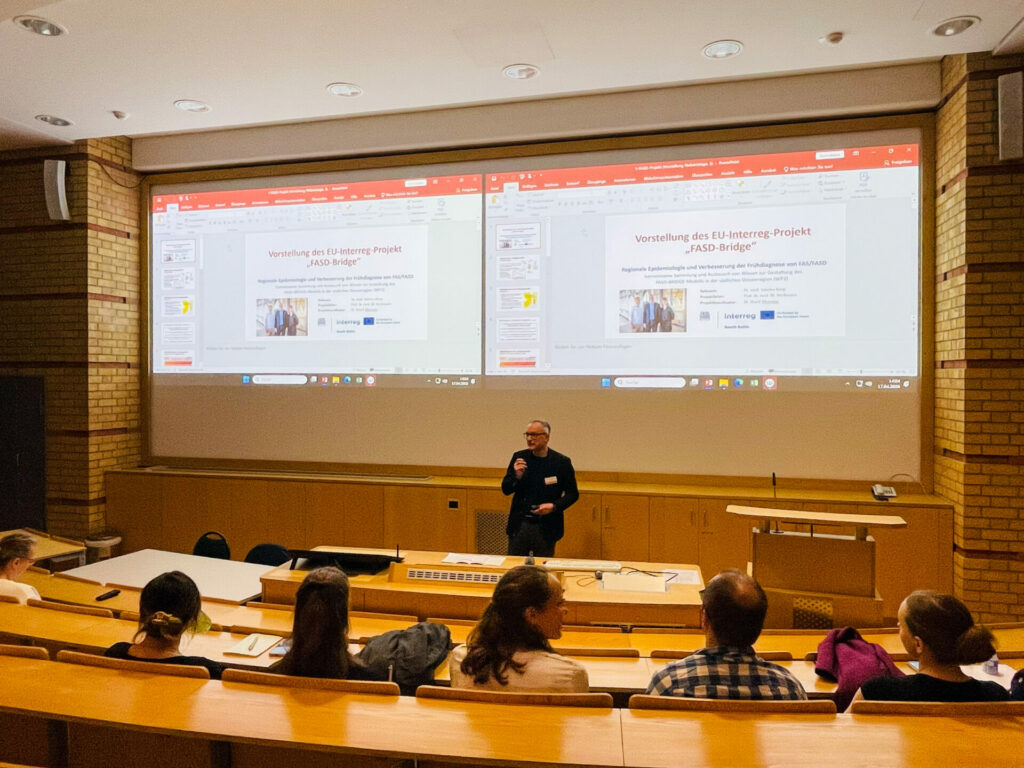
During the 14th Greifswald Pediatric Conference, 2026 at University Medical Center Greifswald in Germany, the chair of the opening session, Prof. Dr. Heckmann, introduced the EU-Interreg project “FASD-Bridge” and its overall importance as well as aims in south Baltic region. Following his introductory and welcoming speech, he invited the first speaker of the opening ceremony, Dr. Koop who introduced the overarching aims of the project and subsequently outlined the structure of its three work packages, highlighting their objectives along with the associated partners (Poland, Lithuania and Germany) in the South Baltic region.
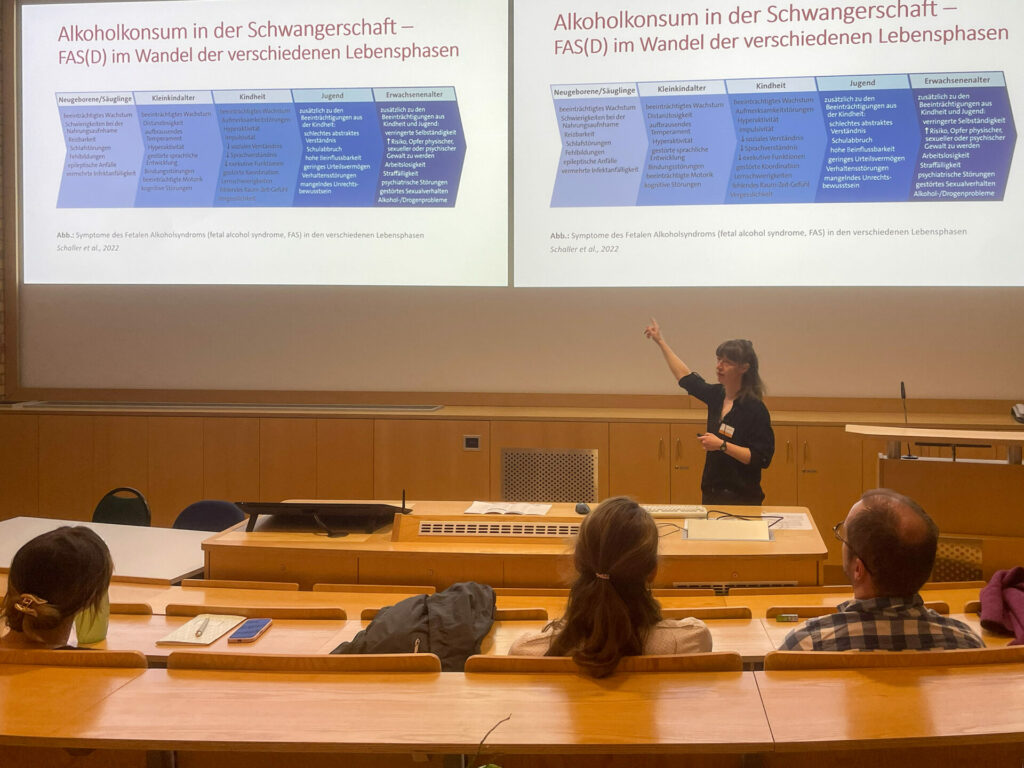
In the presentation she emphasized improving prevention, diagnosis and family support for children and adolescents with Fetal Alcohol Spectrum Disorders (FASD). During her speech, she presented evidence-based fact check on alcohol consumption in pregnancy at global, European and German levels; outlined the pathophysiology of FASD as a consequence of prenatal alcohol exposure, and how this can lead to a broad range of physical anomalies, cognitive deficits and behavioral difficulties. Besides focusing on current barriers to prevention, including lack of awareness, conflicting public messages about “safe” drinking levels, stigma, and structural gaps in counselling services, Dr. Koop placed utmost importance on principles of communication with women, who may be consuming alcohol during pregnancy. Therein she put emphasis not only on a non-judgmental, empathetic and harmonious attitude but also on a rapport-based approach that focuses solely on support and risk reduction rather than blame.
In a nutshell, the informative presentation provided participants with a comprehensive introduction to FASD-Bridge project framework, clarified the specific goals of each work package, and offered practical impulses for pediatricians on how to strengthen prevention, early identification and counselling in terms of FASD in their daily clinical work and settings. The presentation was attended by around 110 participants from multidisciplinary departments like pediatricians, neonatologists, gynecologists, midwives, nurses, researchers and some other.